
Business: Product Management
UXmatters has published 16 articles on the topic Product Management.
Top 3 Trending Articles on Product Management
-
Book Review: The Lean Product Playbook
July 20, 2020No Comments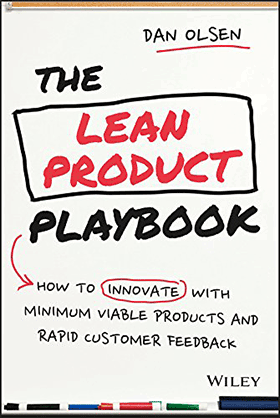 Over the last several years, I’ve noticed a shift in the adoption of User Experience within organizations. This is encouraging, but might also require UX professionals to consider the skills and the roles that we bring to product teams. There are two key factors that are now impacting the way UX professionals work with product teams.
First is the adoption of new project-management methods, as well as the integration of UX deliverables into those methods. Early in my career, most software and Web projects followed a waterfall methodology, which is still common in manufacturing industries. The difficulty I frequently encountered with this approach was that it rarely allowed sufficient time for the integration of new knowledge. UX research often got squeezed out because it didn’t directly add business value. Often, from the beginning of a project, a product team essentially had to know exactly what they would deliver at the end of the project. The team’s inability to deviate from the original plan undermined the iterative nature of most UX design approaches. Read More
-
Book Review: Hooked: How to Build Habit-Forming Products
June 21, 2021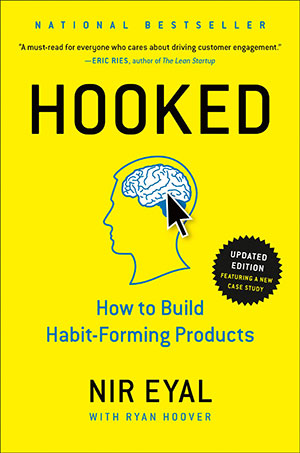 In recent years, the perception of UX design has changed dramatically. In the profession’s early days, less mature organizations frequently treated UX professionals as another type of graphic designer, as though UX designers were synonymous with Web designers. But, in today’s leading organizations, UX design is a strategic capability that drives innovation and enhances competitiveness. Similarly, the role of UX professionals has shifted beyond creating functional—if not delightful—user experiences by applying usability, information architecture, and design principles. Now, UX professionals are applying more of their understanding of psychology and human behavior to devising design principles in the service of persuasion. Read More
 -
Building a User-Centered Product-Management Culture
June 17, 2024If you’ve built an innovative product with a beautiful user interface and high-tech features, but it still isn’t selling well, the reviews aren’t satisfactory, and you keep losing customers, it’s time to reevaluate whether UX design and product-management operations are keeping users at the center of your product-development efforts.
A user-centered product-management culture ensures that your services align with customers’ needs and add value to their lives. Customers should feel that you’ve designed every interaction with your product to address their needs and challenges. Plus, a user-centered culture builds loyalty, improves customer retention and conversion, and enhances brand value.
Wondering how to create user-centered culture at your company? In this article, I’ll consider some proven strategies for building a user-centered product-management culture. Read More
All Articles on Product Management
- Building a User-Centered Product-Management Culture
- AI and Automation in Product Management: Opportunities and Limitations of Emerging Tools
- Making Product Managers and UX Designers Wear Users’ Hats
- Gaining Product Sense Through UX Research
- 5 Product Analyses That Put Customers at the Center of Your PLG Strategy
- Book Review: Escaping the Build Trap
- How Product Managers Leverage Data to Boost Conversions
- Change Management of the Product Experience, Part 2
- Book Review: Hooked: How to Build Habit-Forming Products
- Change Management of the Product Experience, Part 1
- Book Review: The Lean Product Playbook
- 3 Keys to Effective Product Roadmapping
- Riding the UX Horse to Create Empowered, Successful, Loyal Users
- Agile Manifesto for Product Management, Part 2
- Why Enterprise Product Managers Should Choose MVEs Over MVPs
- Agile Manifesto for Product Management, Part 1