
Process: Agile UX
UXmatters has published 42 articles on the topic Agile UX.
Top 3 Trending Articles on Agile UX
-
Choosing the Right UX Process for Your Software-Development Model
June 17, 20193 Comments“It’s very easy to be different, but very difficult to be better.”—Jonathan Ive, Chief Design Officer, Apple
Deciding on the right product-development process for your team can often be a paradox. Maintaining balance amidst a proliferation of inconsistencies in product requirements and development outcomes is challenging for both large and mid-sized organizations —especially when teams lack any metrics to measure their impact on a release.
Friction arises when there is a mismatch between the user’s mental model and product features. When a development team finds itself in an untenable situation, the blame game begins. But as Mad Men’s Don Draper often said, “Move forward.” Read More
-
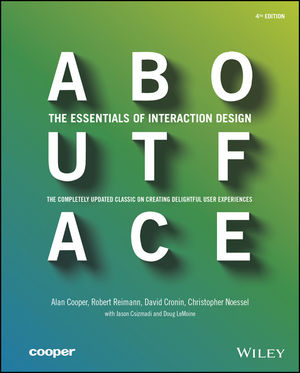
About Face: The Essentials of Interaction Design
November 17, 2014This is a sample chapter from the 4th Edition of About Face: The Essentials of Interaction Design, by Alan Cooper, Robert Reimann, David Cronin, and Christopher Noessel.
Chapter 6: Creative Teamwork
 In the Introduction to this book, we described the Goal-Directed method as consisting of three p’s: principles, patterns, and processes. However, there’s a fourth p worth mentioning—practices. This book mostly concerns itself with the first three, but in this chapter we’d like to share a few thoughts about the practice of Goal-Directed design and how design teams integrate into the larger product team. Read More
 -
How to Combine User-Centered Design and Agile Development
December 7, 2015Agile development has recently captured the imagination of many software development teams—and with good reason: its focus on producing working software quickly is well suited to today’s fast-paced markets. But how do you go about combining agile with user-centered design (UCD) so you can enjoy the benefits of both approaches? On the face of it, they should work well together because both philosophies are iterative, incorporating testing with users and refinement. But in practice, they often conflict with one another.
An agile approach such as Scrum tries to minimize up-front planning in favor of producing working code quickly. Plus, agile generally prefers in-situ workshops for gathering requirements, while UCD largely favors up-front user research. Agile also uses working software as its primary measure of progress, while UCD focuses on whether users can easily achieve their goals—with or without software. To add to these discrepancies, because agile is typically led by developers, while UX professionals usually drive UCD, the differences between these two approaches can result in political conflicts in many companies. Read More
Columns on Agile UX
-
Ask UXmatters
Get expert answers
A column by Janet M. Six
All Articles on Agile UX
- Busting the Myths About Agile Development and User Research
- Design Sprints Revisited: Designing with Your Users and Developers
- 5 Ways Agile UX Can Revolutionize Your Business
- User Experience and the Big Picture, Part 3: The Solution
- User Experience and the Big Picture, Part 2: Lessons Learned
- Is Focusing on Agile or Lean Damaging the Practice of UX? Part 2
- Is Focusing on Agile or Lean Damaging the Practice of UX? Part 1
- User Experience and the Big Picture, Part 1: Problems, Problems
- Keeping Your Clients Happy When Doing Agile Development
- Delivering Innovation
- Integrating UX Design into a Continuous-Delivery Environment
- Choosing the Right UX Process for Your Software-Development Model
- Connecting the Dots to Create Magic at the Intersections
- Becoming an Agile Company
- User Experience and Agile
- Agile Development Is No Excuse for Shoddy UX Research
- The Agile Manifesto for Designers
- How to Combine User-Centered Design and Agile Development
- Agile UX
- If Congress Went Agile
- Information Architecture and Agility: A Work in Progress
- About Face: The Essentials of Interaction Design
- The Role of Iterative Usability Evaluation in Agile Development: A Case Study
- Adapting Scrum to a UX Model
- The Secret to Making UX a Top Priority in Agile
- Why Agile Is So Hard
- Balancing UX Strategy with Lean and Agile | Roles in UX Strategy | UX Versus CX Strategy
- Service Design + Lean UX + Disruptive Design = UX Strategy?
- Fast, Loose, and Oh-So-Very Wrong: How I’ve Come to Love Agile UX Design
- Are Rapid Prototyping, Lean UX, and Agile Development Good for User Experience?
- When Agile and User Experience Click
- Lean UX and Rapid Innovation
- Agile Problems, UX Solutions, Part 2: Thoughts on Patterns and Prototyping
- Agile Problems, UX Solutions, Part 1: The Big Picture and Prototyping
- (Why) Is UXD the Blocker in Your Agile UCD Environment?
- Is UX Strategy Fundamentally Incompatible with Agile or Lean UX?
- Developing UX Agility: Letting Go of Perfection
- Integrating UX into Agile Development
- Conference Review: IA Summit 2011: Part I
- Can UX Be Agile?
- Four Factors of Agile UX
- Clash of the Titans: Agile and UCD
New on UXmatters
- Linking Customer Experience to Business Results for Sustainable Growth
- Using AI to Design Better Mobile-App User Experiences
- Leveraging the Psychology of Color in UX Design for Health and Wellness Apps
- Elevating the User Experience and Fostering Loyalty: Accessible Design for Travel-Booking User Interfaces
- Using Data Analytics to Optimize the In-Store and Online Retail Experience