
Business: Innovation
UXmatters has published 22 articles on the topic Innovation.
Top 3 Trending Articles on Innovation
-
Empathy Is the Key to Innovation
June 3, 2019No CommentsMuch has been written on the difference between innovation and invention. This makes some sense because it seems every company in the world, big or small, is striving for an innovative approach to solving existing problems. However, there is mass confusion about what innovation actually is—especially in the enterprise-software space.
It seems that every consultancy is frothing at the mouth to win the very lucrative opportunities to help organizations solve their digital-transformation problems. And they’re employing our experience-design playbook to do this.
How? In a word: empathy. Hearing and reading about all the latest approaches in technology and sales, empathy is the best new thing—the secret skill that can enable us to reach dizzying, new heights. Empathy could solve world hunger and make us all better people. But the fact that empathy does actually make us better people is lost on most. Empathy can help us innovate more quickly and, ultimately, sell more products, satisfy more customers, and generate greater revenues. Read More
In Innovation | Soft Skills -
Innovating the Next Generation of Mobile Apps
Future-Proofing Mobile Apps
Innovating the next generation of mobile apps
A column by Muhammad Muzammil RawjaniAugust 19, 2024New technologies and user behaviors are continually emerging, forcing us to rethink how we design and develop mobile apps. As someone who has been deeply invested in this space for years, I find this constant evolution exciting. It pushes us to break boundaries and create mobile experiences that are not just functional but truly transformative.
But where are we going from here? What innovations will shape the next generation of mobile apps? In this column, I’ll cover some exciting innovations that will revolutionize the way we interact with our mobile devices.
The Rise of AI-Powered Experiences
Artificial intelligence (AI) is no longer a dream for us. Mobile-app solutions have started to use AI to personalize experiences and automate tasks. For example, a fitness app tailors workout routines based on the user’s activity level and preferences, and a travel app curates personalized itineraries based on the user’s interests and past trips. These are some common examples that we can find everywhere, but the possibilities are endless. Read More
-
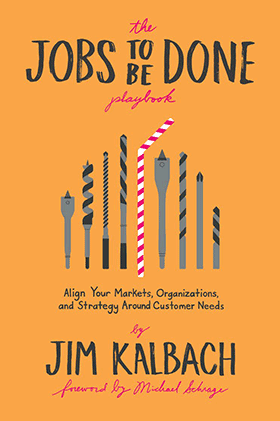
Book Excerpt: The Jobs to Be Done Playbook
May 18, 2020This is an excerpt from Chapter 4 of Jim Kalbach’s new book The Jobs to Be Done Playbook: Align Your Markets, Organization, and Strategy Around Customer Needs. ©2020, Rosenfeld Media.
Chapter 4: Defining Value
 In this chapter, you will learn about these plays:
- How to find unmet needs
- How to create goal-based personas
- A new way to compare competing solutions
- How to define a value proposition
The product marketing manager at a company I once worked for stood up in a meeting to present his strategy. He proceeded to describe the top customer needs that we should support with our solutions. I was thrilled to see him align to a customer-centric model. Read More
Columns on Innovation
-
Ask UXmatters
Get expert answers
A column by Janet M. Six -
On Good Behavior
The essentials of interaction design
A column by Pabini Gabriel-Petit
All Articles on Innovation
- Innovating the Next Generation of Mobile Apps
- What Is a Normal Level of Innovation Risk?
- Citizen Developers as Innovators
- Hibernation and Innovation
- Book Review: The Innovation Stack
- Book Excerpt: The Jobs to Be Done Playbook
- Prototyping User Experiences: Reducing the Risks of Product Innovation
- Book Review: Innovation by Design
- Delivering Innovation
- Empathy Is the Key to Innovation
- Book Review: Think Like a Futurist
- 7 Questions to Ask Users Early in the Product Lifecycle
- Book Review: Creative Change
- Humanizing the Enterprise
- Encouraging Innovation: Drug Discovery and Clinical Trials
- The Conundrum of Humdrum Innovation
- The Role of Constraints in Design Innovation
- UX Strategy: How to Devise Innovative Digital Products That People Want, Part 2
- Innovation with Intention: The Next Evolution for the Experience Designer
- Fostering Innovation and Creativity | Project Scoping
- Effective UX in a Corporate Environment: Part II
- Experiencing CHI 2006: From a Practitioner’s Viewpoint: Part I